Lead & Zinc Processing
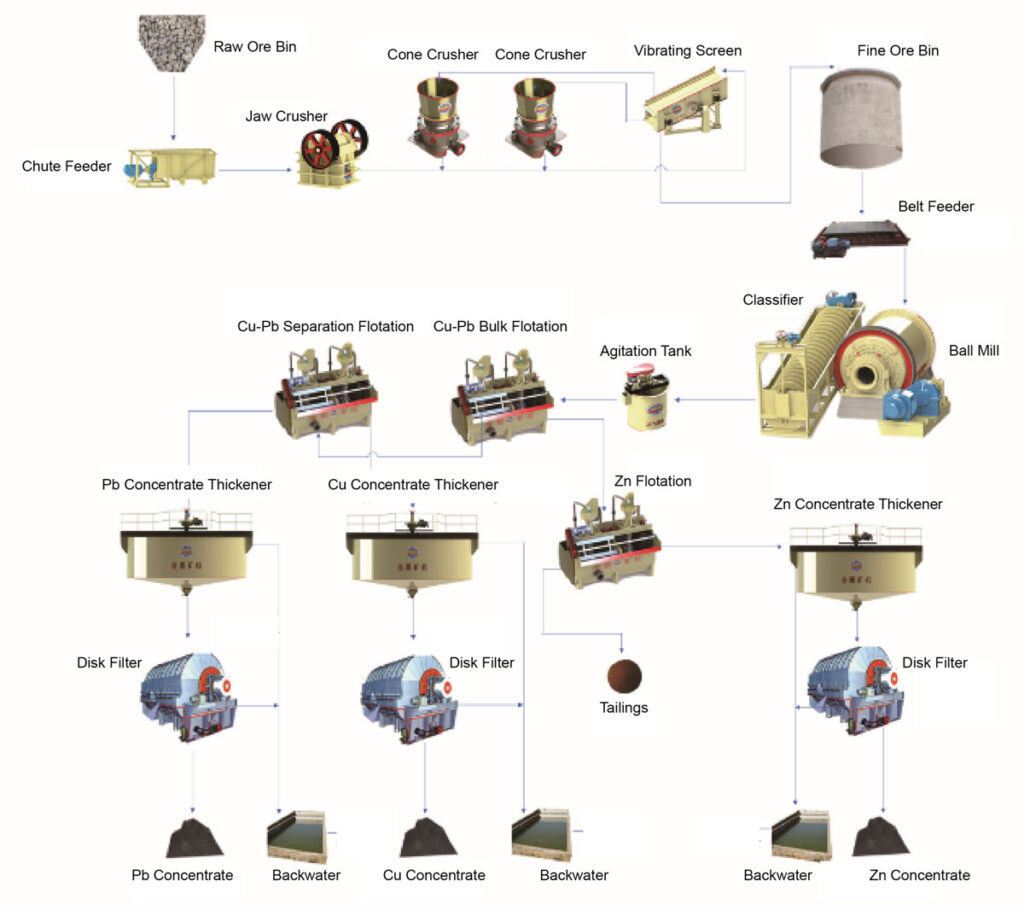
Lead–zinc ores are generally classified into two main categories: oxide lead–zinc ores and sulfide lead–zinc ores. Sulfide lead–zinc ores are mainly processed using flotation. Depending on the mineralogical characteristics of the ore and the required product specifications, sulfide lead–zinc processing can be based on several flotation approaches, including direct flotation, bulk flotation and differential flotation.

Zinc Concentrate

Lead Concentrate
Direct Flotation
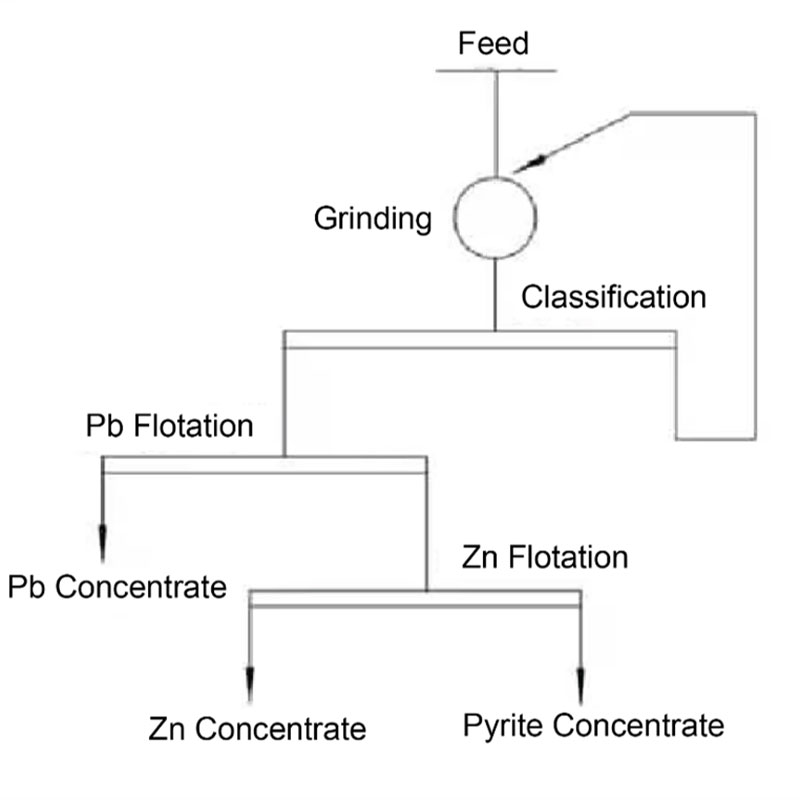
This process is based on differences in the floatability and flotation kinetics of lead, zinc, and sulfur-bearing minerals (mainly pyrite) to selectively recover these minerals and produce separate lead, zinc, and pyrite concentrates. This approach can reduce the required flotation cell volume and reagent consumption by optimizing the flotation circuit and operating conditions. The general flowsheet for the direct flotation process is presented in the figure below.
Bulk Flotation
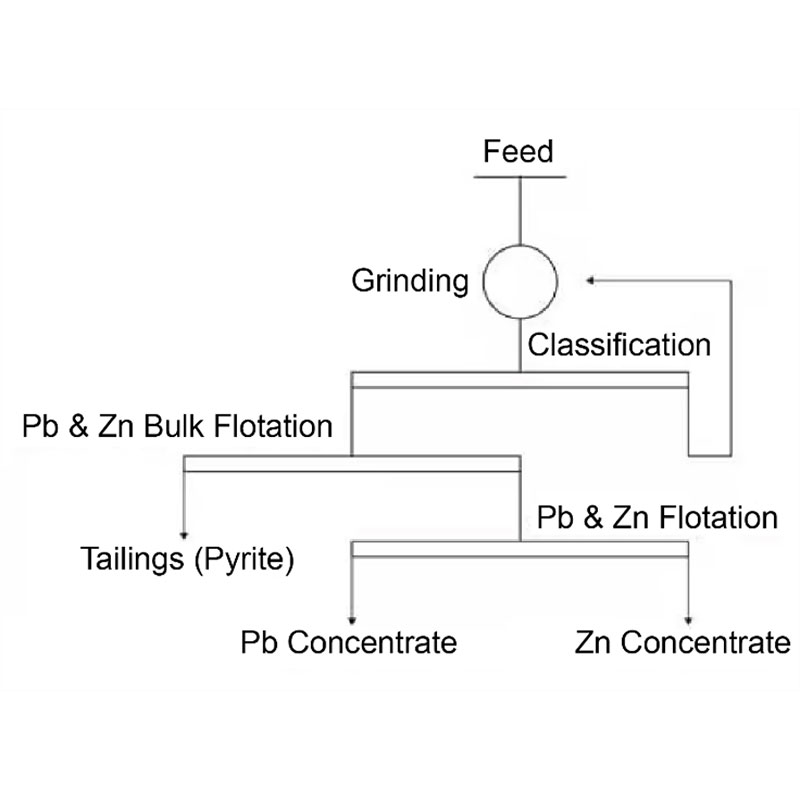
In this process, the lead and zinc minerals present in the pulp are initially recovered together into a bulk concentrate, while the gangue minerals are directly rejected as tailings. The bulk concentrate is then subjected to a selective separation stage through the addition of appropriate reagents, allowing the lead and zinc minerals to be separated and recovered as individual concentrates. The flowsheet for this process is shown in the figure below.
Simultaneous Flotation
When the minerals present in the ore exhibit similar flotation characteristics, such as sphalerite and galena, simultaneous flotation can be applied. In this approach, zinc minerals can also float effectively during the initial lead flotation stage. The resulting bulk lead–zinc concentrate is subsequently processed to separate the lead and zinc minerals, ultimately producing separate lead and zinc concentrates.
Differential Flotation
In some ores, different minerals may exhibit similar flotation behavior, while minerals of the same type may show different flotation characteristics due to variations in liberation, surface properties, or mineral associations. In such cases, differential flotation can be applied. In this approach, lead and zinc flotation is carried out through multiple stages under controlled conditions. The process is designed to account for differences in the optimum flotation conditions and maximum floatability of lead- and zinc-bearing minerals, enabling their selective recovery and the production of separate concentrates. The general flowsheet of the differential flotation process is shown in the figure below.