Molybdenum Processing
Molybdenum ores containing copper are commonly processed using direct flotation. The valuable minerals present in the final molybdenum concentrate typically include molybdenite, pyrite, and minor amounts of chalcopyrite. The beneficiation of molybdenum ores generally involves bulk copper–molybdenum flotation, pyrite flotation, and subsequent copper–molybdenum separation.
Molybdenum processing can be applied to molybdenum ores as well as hard, complex ores with complicated mineralogical characteristics and associated sulfide minerals.
Common molybdenum ore types include copper–molybdenum, tungsten–molybdenum, and molybdenum–bismuth ores.
Usual methods for copper–molybdenum separation and production of molybdenum concentrates include sodium sulfide and sodium cyanide-based processes. The achievable molybdenum recovery and concentration ratio depend largely on the grade and mineralogical characteristics of the feed ore.
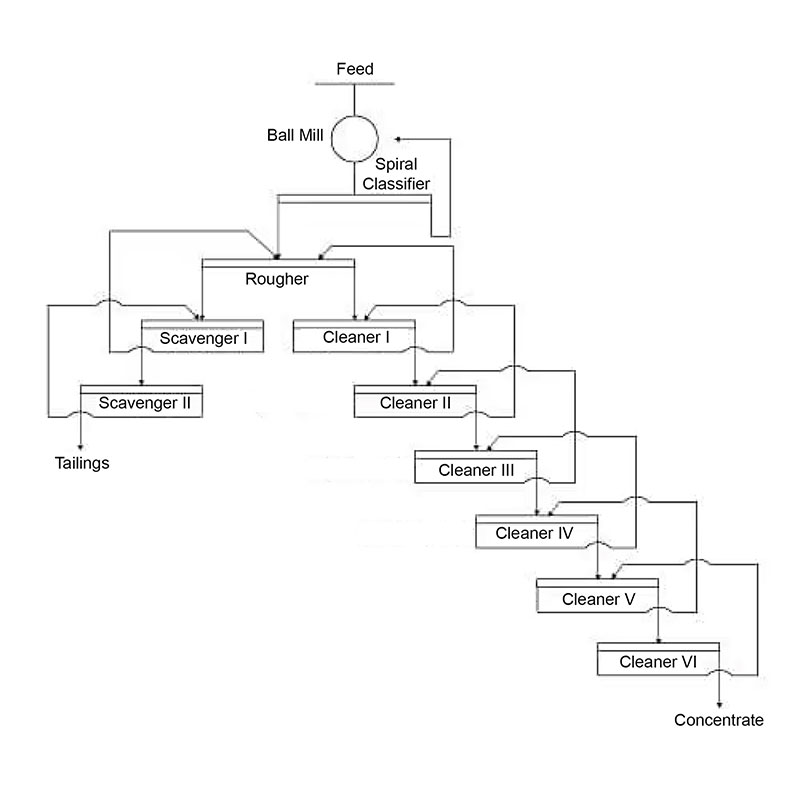
Molybdenum ore beneficiation process and required equipment are as follows:
- Crushing: In the first stage, the run-of-mine feed is crushed using jaw and cone crushers. The crushed material is then transported to storage bins or stockpiles using belt conveyors.
- Grinding: In the second stage, the crushed ore undergoes grinding in a ball mill to achieve the required particle size for downstream beneficiation.
- Classification: The ground particles slurry is then fed to a spiral classifier, which separates particles based on their settling velocity, particle size, and specific gravity to achieve the required classification.
- Flotation: Following the addition of the required flotation reagents to the pulp, the slurry enters the flotation circuit. Flotation cells consist of a tank, an aeration system, and an agitation mechanism. Within the flotation cells, valuable mineral particles are selectively affected by collectors and attach to air bubbles. The mineral-laden bubbles rise to the surface, forming a froth layer. The froth containing the valuable minerals is then removed from the upper section of the cells using mechanical paddles.
- Dewatering: In the final stage, high-efficiency thickeners and filters are used to dewater the flotation concentrate. The resulting dewatered and dried concentrate constitutes the final product of the processing plant.