


Graphite Processing
Graphite processing methods include flotation, electrostatic separation, gravity separation, and other beneficiation techniques. Among these, flotation is the most widely used method for graphite beneficiation. Graphite ore beneficiation and separation processes are particularly suitable for ores containing graphite in different crystalline forms, as well as ores associated with silicate minerals such as mica and pyrite.
Overview of Graphite
Graphite ores generally occur in two main forms: amorphous graphite and flake graphite. Amorphous graphite is also known as cryptocrystalline graphite. This type of graphite has a very fine crystalline structure and a dull, earthy appearance and generally has limited industrial applications.
However, the run-of-mine grade of amorphous graphite is relatively high, typically ranging from 60% to 80% carbon. Its floatability, however, is relatively poor, and flotation does not significantly increase its grade. As a result, graphite ores with grades below approximately 65% are generally not considered economically attractive for mining.
Flake graphite, on the other hand, occurs in a flaky or sheet-like form. Its run-of-mine grade is generally relatively low, typically around 3–5%, with the highest grades generally not exceedingly approximately 20–25%. Flake graphite exhibits good floatability, and its grade can be increased to more than 90% through flotation. Therefore, mining and processing of ores with grades as low as 2–3% can be economically feasible, depending on the deposit and process characteristics.
Flake graphite has excellent physical and chemical properties and can be used to produce high-purity carbon and graphite products. Therefore, when evaluating different graphite ores, it is important not only to determine the ore grade, but also to identify the type and morphology of graphite before selecting the appropriate beneficiation method.
Flake graphite generally exhibits good floatability, and most flake graphite ores are processed using froth flotation. Kerosene and diesel oil are commonly used as collectors in graphite flotation.
Cryptocrystalline graphite ores are often associated with silicate minerals such as mica. During flotation, various depressants and modifying agents may be used to depress these gangue minerals, including starch, dextrin, organic binders, cellulose, lime, oxidizing agents, and other reagents.
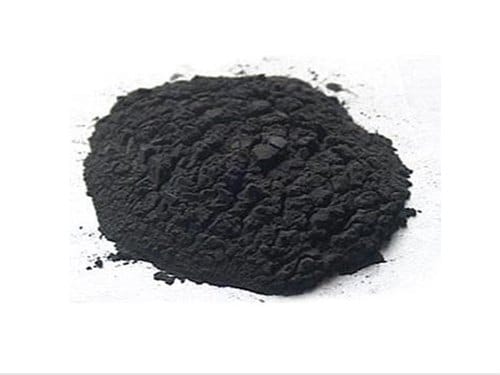
Processed Graphite Powder
Graphite Processing Flowsheets
Multi-Stage Grinding and Flotation
To minimize damage to the graphite flakes and preserve their size and morphology, grinding is generally performed in multiple stages. Following several stages of regrinding and flotation, a concentrate with the required quality can be produced.
Combined Flotation and Gravity Separation
For graphite ores associated with minerals having a significantly higher specific gravity, a combination of gravity separation and flotation can be employed. In this approach, the heavy minerals are initially removed through gravity separation, while the remaining fraction containing lighter graphite-bearing particles is subsequently processed through flotation.
Crystalline Graphite Flotation Flowsheet
In general, graphite ore has moderate to relatively low hardness, making it comparatively easy to crush. Therefore, single-, two-, or three-stage open-circuit crushing configurations may be used depending on the ore characteristics and plant capacity.
The flotation process generally incorporates a closed-circuit, multi-stage grinding and classification circuit, in which intermediate-size particles are returned to the beginning of the circuit for further size reduction.
Three main approaches can be considered for multi-stage regrinding:
- Concentrate regrinding
- Regrinding of intermediate-grade ore
- Tailings regrinding
For crystalline graphite ores, concentrate regrinding is commonly applied. Under normal operating conditions, the overall recovery can reach approximately 80%, depending on ore characteristics and process configuration.
Cryptocrystalline Graphite Processing
Although cryptocrystalline graphite generally has a high grade, its beneficiation and separation are relatively difficult. Cryptocrystalline graphite exhibits poor floatability, and flotation can generally serve only as a preliminary upgrading stage.
In many cases, the ore is initially sorted manually through hand sorting, followed by grinding and subsequent sale or further processing. The appropriate processing route ultimately depends on the graphite grade, mineralogical characteristics, liberation characteristics, and the required final product specifications.